
PFAS are a group of synthetic compounds manufactured commercially since the 1950s. Their carbon-fluorine bond — one of the strongest in chemistry — is what makes them so effective as industrial chemicals, and what makes them so persistent in the environment. They don't break down naturally, which is why they've earned the label "forever chemicals".
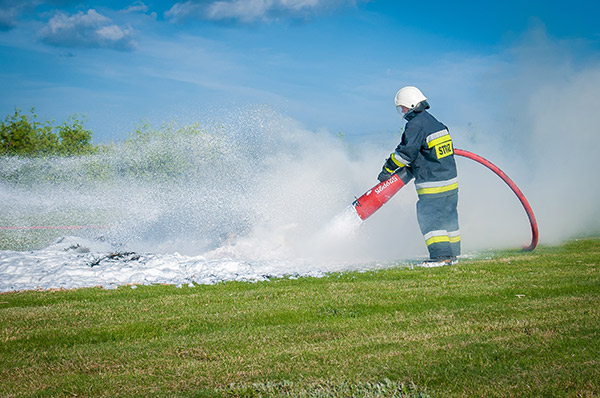
PFAS were widely used in consumer products (non-stick cookware, water-resistant clothing, food packaging) and industrial products — most significantly in Aqueous Film Forming Foams (AFFF) used in firefighting. Historical use at airports, military bases, fire training facilities, and industrial sites has resulted in widespread contamination of soil and groundwater.
Regulatory context: Australia's PFAS NEMP provides guidance on investigation, assessment, and management of PFAS contamination. If you're managing a site under NEMP requirements, contact us to discuss your testing program.
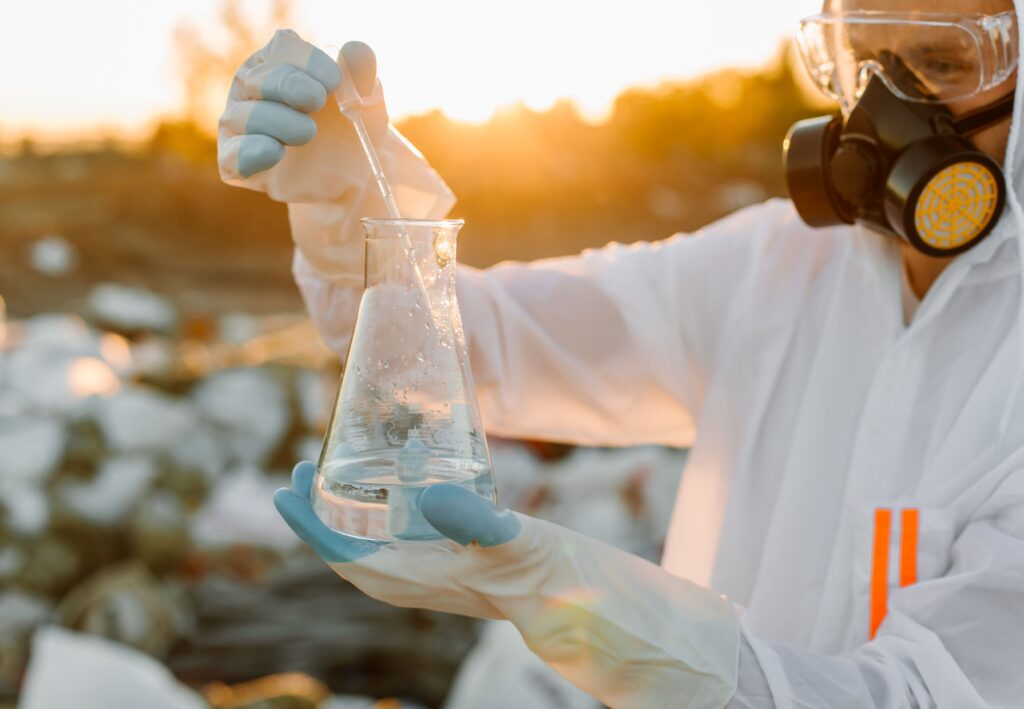
Envirolab analyses PFAS by liquid chromatography combined with tandem mass spectrometry (LC-MS/MS). This technology provides fast, sensitive, and accurate detection of PFAS across a wide range of sample matrices at trace-level concentrations — essential given the very low guideline values now in effect for drinking water and ecological monitoring under the PFAS NEMP.
We are NATA accredited for 28+ PFAS compounds including:
Standard PFAS analysis detects only the terminal, stable PFAS compounds. However, many samples also contain precursor PFAS — compounds that haven't yet converted to PFOS, PFHxS, or PFOA but will do so over time through chemical or biological transformation in the environment.
Envirolab was an early adopter of the Total Oxidisable Precursor Assay (TOPA), which oxidises precursor PFAS to their terminal forms before analysis — giving a more complete picture of total PFAS burden in a sample. This is particularly valuable for AFFF-impacted sites where precursor PFAS can make up a significant proportion of total contamination.
When to use TOPA: Consider TOPA where AFFF use is confirmed or suspected, or where standard analysis underestimates contamination relative to field observations. Contact us to discuss whether TOPA is appropriate for your project.
PFAS bioaccumulate in humans through dietary exposure, contaminated drinking water, and occupational contact. Blood and serum testing is used to assess the body burden of PFAS in individuals at risk of elevated exposure — including people living near contaminated sites, workers at AFFF-using facilities, and participants in public health studies.
Firefighter PFAS Study: Envirolab Sydney supported a PFAS reduction study with the South Australian Metropolitan Fire Service, investigating whether cholestyramine and plasma donation could lower PFAS levels in firefighters' blood. The study showed significant reductions in PFOS and PFHxS — providing promising evidence for potential treatment pathways.
PFAS bioaccumulate and biomagnify in food chains — meaning organisms at higher trophic levels (including humans eating contaminated fish) can accumulate PFAS at concentrations far exceeding those in the surrounding environment. Biota testing is required for ecological risk assessment and is increasingly mandated near contaminated waterways and sediments.
PFAS sampling requires specific containers and handling to avoid contamination and loss. Teflon-lined containers must not be used. Sample holding times vary by matrix — incorrect storage will compromise results.
Critical: Never use Teflon-lined containers for PFAS samples — PTFE (Teflon) contains PFAS and will contaminate your samples. Use polypropylene (PP) or high-density polyethylene (HDPE) containers only.
2 × 60mL polypropylene bottles, no Teflon liner. Cool to <6°C. Holding time: 14 days (longer times reported in literature)
2 × 250mL polypropylene bottles, no Teflon liner. Cool to <6°C. Holding time: 28 days.
Minimum 20g in polypropylene jar. Cool to <6°C. Holding time: 60 days (std/low), 28 days (trace level).
Contact us for appropriate collection containers and chain of custody requirements before sampling.
Talk to our PFAS specialists about your testing requirements — including TOPA, biota, blood/serum, and multi-matrix programs.